

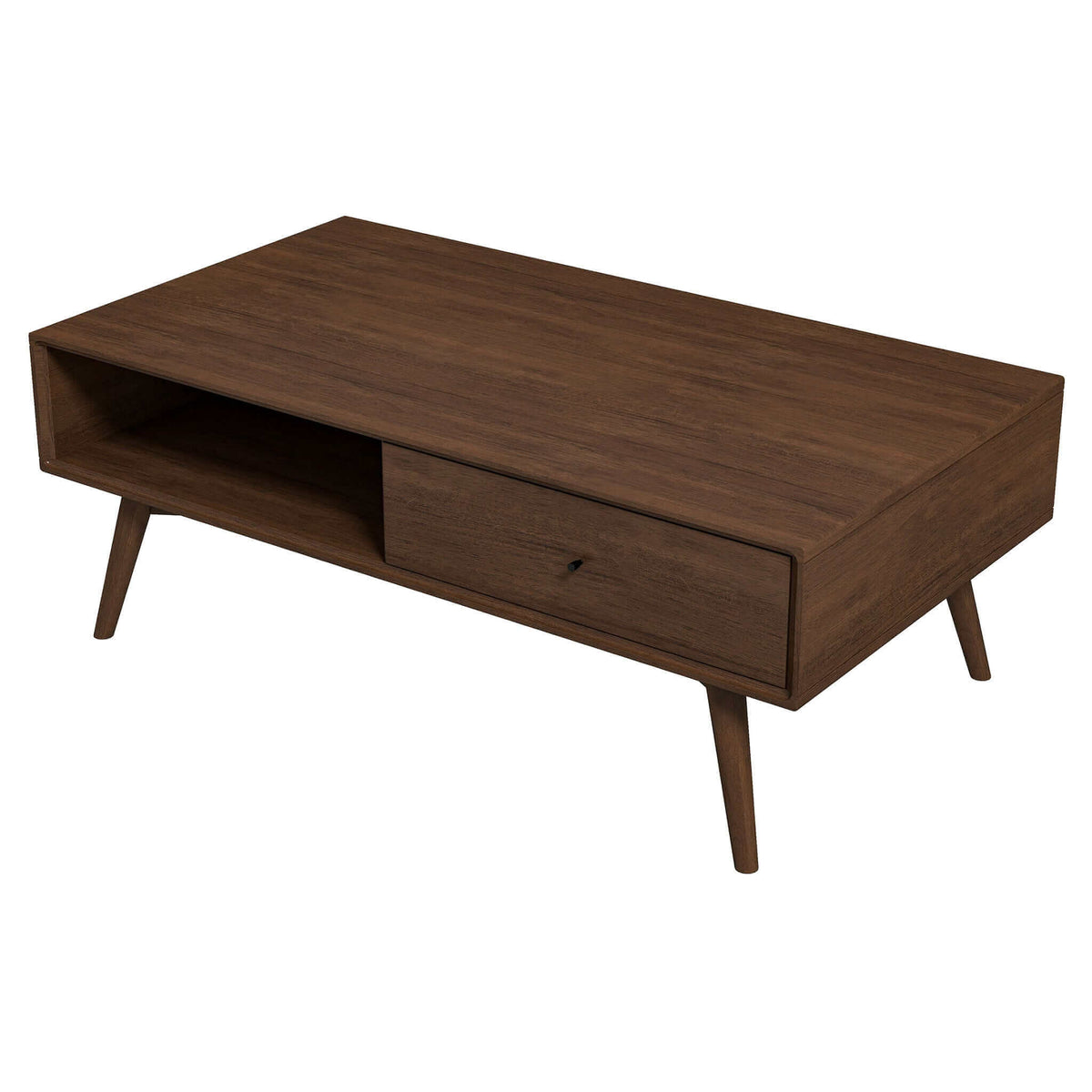
Why Coffee Table Proportions Matter
A coffee table is one of those pieces that's easy to overlook until it's wrong. Too small, and it looks lost in front of a large sofa. Too big, and it blocks the walkway or makes the room feel crowded. The good news is that coffee table sizing follows a few simple, repeatable rules that take most of the guesswork out of shopping.
Rule 1: About Two-Thirds the Length of Your Sofa
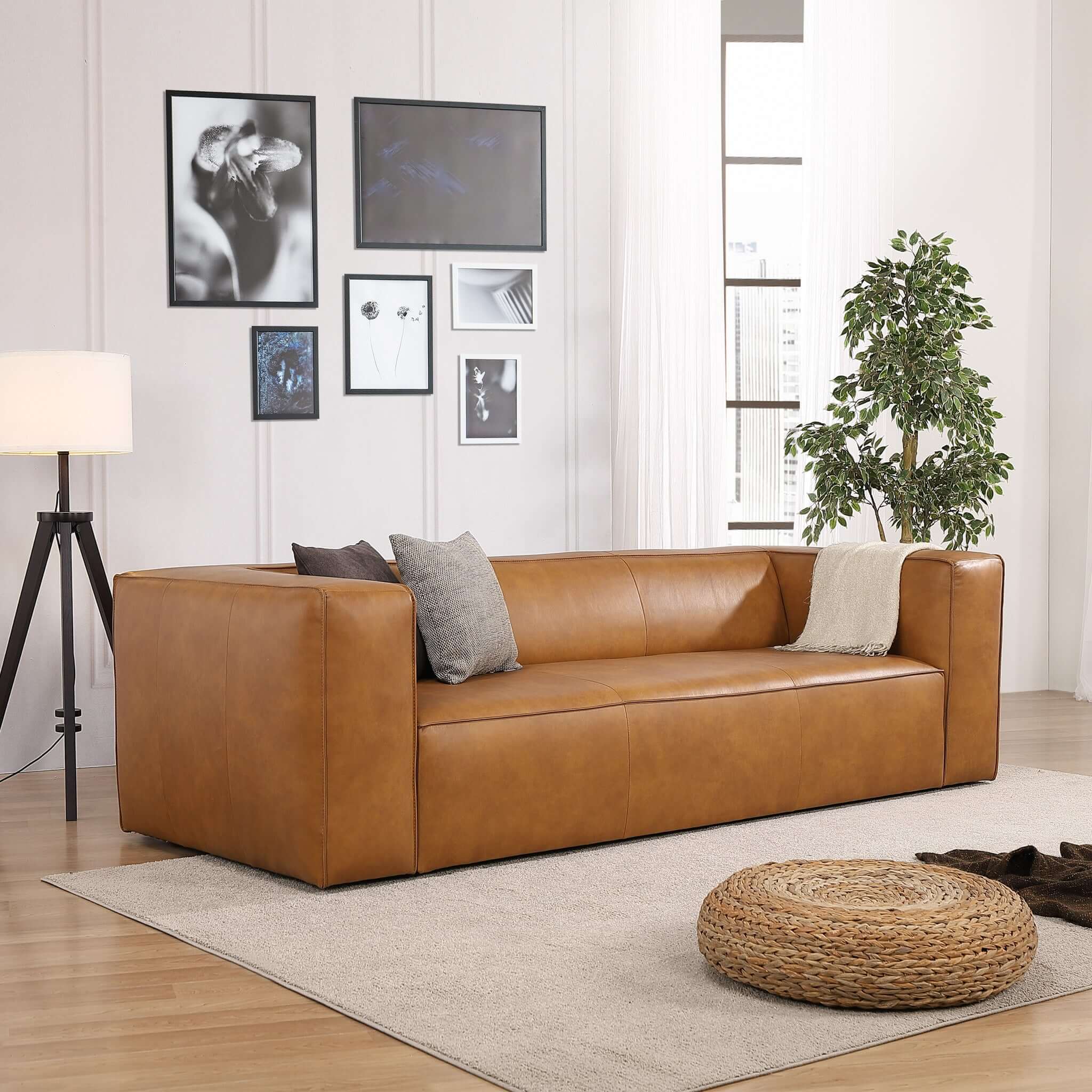
A commonly used starting point is to choose a coffee table that's roughly two-thirds the length of your sofa. So for a sofa that's about 84 inches long, a coffee table somewhere around 48 to 56 inches long will generally look proportional — long enough to feel intentional, short enough to leave room to walk around it on either end.
This isn't a strict rule, and plenty of great-looking rooms bend it. But it's a useful sanity check if you're staring at two tables online and can't decide which will actually look right in your space.
Rule 2: Match the Height to Your Seat Cushions
A coffee table generally looks and functions best when its height is within an inch or two of your sofa's seat cushion height, give or take. If the table sits much lower than the cushions, reaching down to set a drink or plate becomes awkward. If it sits much higher, it can start to compete visually with the sofa. Most standard coffee tables land somewhere in the 16 to 18 inch range, which lines up well with most sofa seat heights.
Rule 3: Leave 14 to 18 Inches Between Table and Seating
Spacing matters as much as size. A gap of roughly 14 to 18 inches between the edge of the coffee table and the front of your sofa or chairs gives enough room to walk through comfortably while still keeping the table within easy reach. Much closer than that and the space feels tight; much farther and you'll find yourself leaning forward every time you reach for something.
Round vs. Rectangular: Which Shape Fits Your Room?
Rectangular Coffee Tables
A rectangular table generally pairs most naturally with a rectangular sofa or sectional, echoing the lines of the room. It also tends to make the most of a longer, narrower living room layout, since it fills the space in front of a long sofa without eating into side walkways.
Round Coffee Tables
A round coffee table softens a room full of straight lines and can be a practical choice in smaller or more heavily trafficked living rooms, since there are no sharp corners to navigate around. Round tables also work well in front of a sectional's curved or angled seating, where a rectangular shape might leave awkward gaps.
Other Coffee Table Styles Worth Considering
If you like the idea of flexibility, a set of nesting tables can slide together for a minimal look and pull apart when you need extra surface area for guests. A wood coffee table tends to read as more traditional or warm, while glass or metal-framed options generally feel lighter and can help a smaller room feel less closed in. Coffee table sets, which pair a central table with smaller matching end tables, are another option if you want a coordinated look without shopping for each piece separately.
What If Your Room Is Small?
In a tighter living room, consider a smaller coffee table, a round shape to ease traffic flow, or a table with a lower profile and open legs so it doesn't visually block the floor. Pulling the table slightly narrower than the "two-thirds" rule suggests is a reasonable trade-off if walking space is tight. You might also look at end tables as a secondary surface instead of trying to make one coffee table do everything.
A Quick Sizing Checklist
- Aim for roughly two-thirds your sofa's length, as a starting point.
- Match table height closely to your seat cushion height.
- Leave 14 to 18 inches of clearance between the table and seating.
- Choose a shape (round or rectangular) that fits your sofa and traffic flow.
- In smaller rooms, size down and consider open-leg or round designs.
Materials and Everyday Practicality
Beyond size and shape, think about how the table will actually be used day to day. A glass top shows fingerprints and water rings more readily, which matters if the table will see daily use with drinks, kids, or pets nearby. Solid wood tends to be forgiving and easy to wipe down, while a table with a lower shelf underneath adds a spot for books or baskets, which can be useful in a room without much other storage. If your living room doubles as a workspace or a spot where kids do homework, a sturdier material and a slightly higher weight capacity are worth prioritizing over a delicate, purely decorative design.
When a Coffee Table Isn't the Right Fit
Not every layout needs a traditional coffee table. In a very tight room, or one with heavy foot traffic passing directly through the seating area, a pair of small end tables positioned next to each seat can sometimes work better than one central table, since they keep the walkway clearer. This approach also gives each person in the seating area their own spot to set a drink, which some households find more practical than a single shared surface in the middle.
Shop the Look
Browse our round coffee tables and coffee table sets, or explore our full range of living room tables to complete the space.

Leave a comment
All comments are moderated before being published.
This site is protected by hCaptcha and the hCaptcha Privacy Policy and Terms of Service apply.